
If you are just getting started with affiliate marketing, there is a good chance you have already heard the same advice I heard when I first started building websites. “Write great content, optimise it for Google, and eventually the traffic will come.”
Sounds simple enough, right?
Except there is one small problem. Eventually can feel like a very long time when you are a beginner. I remember what it felt like to put time into an article, publish it, share it and then check the numbers, hoping something had happened.
Sometimes, almost nothing did.
That can be frustrating, especially when you are putting hours into your website and wondering whether you are doing something wrong. This is one of the reasons I started paying much closer attention to Pinterest.
I began to realise that Pinterest and Google are not really the same type of traffic source. They can both send people to your website, but they work in very different ways.
And if you are a beginner trying to build an affiliate marketing business, understanding that difference can save you a lot of frustration.
So in this article, I want to compare Pinterest vs Google SEO for beginners, explain how each one works, and share why I believe Pinterest can be an excellent traffic source while you are building your website.
My Experience With Trying to Get Website Traffic
When I restarted my affiliate marketing journey, one of the biggest challenges was getting people to actually find the content I was creating.
Writing the article was only part of the job.
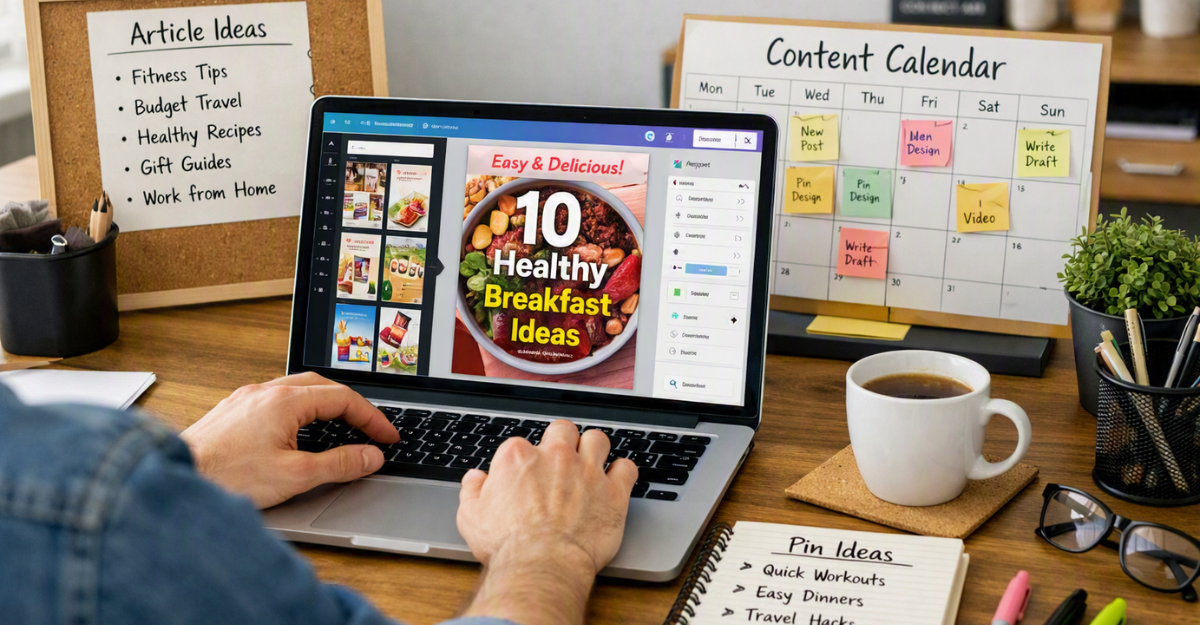
You can spend hours researching a topic, writing the article, adding images, creating internal links and making sure everything looks good.
Then you publish it.
And…
Nothing.
That was one of the lessons I had to learn the hard way: that publishing content does not automatically mean people will see it. Google SEO can eventually become an incredibly valuable source of traffic, but it takes time. Your website needs to establish authority, your content needs to compete with other websites, and Google needs to understand where your pages belong in the search results.
As a beginner, that waiting period can be difficult. Pinterest gave me another option. Instead of publishing an article and simply waiting for Google to discover and rank it, I could create visual content around that article and put it in front of people who were already searching for related information on Pinterest.
That changed the way I thought about content distribution. And it is one of the reasons Pinterest has become such an important part of my current strategy.
 If you’re new to affiliate marketing, or you’re still waiting for things to click finally, I’d love to help. I’ve created a Beginner Guide that covers everything I wish someone had shown me when I was starting out. If you think it could help you too, you can read it here.
Pinterest and Google SEO Work Differently
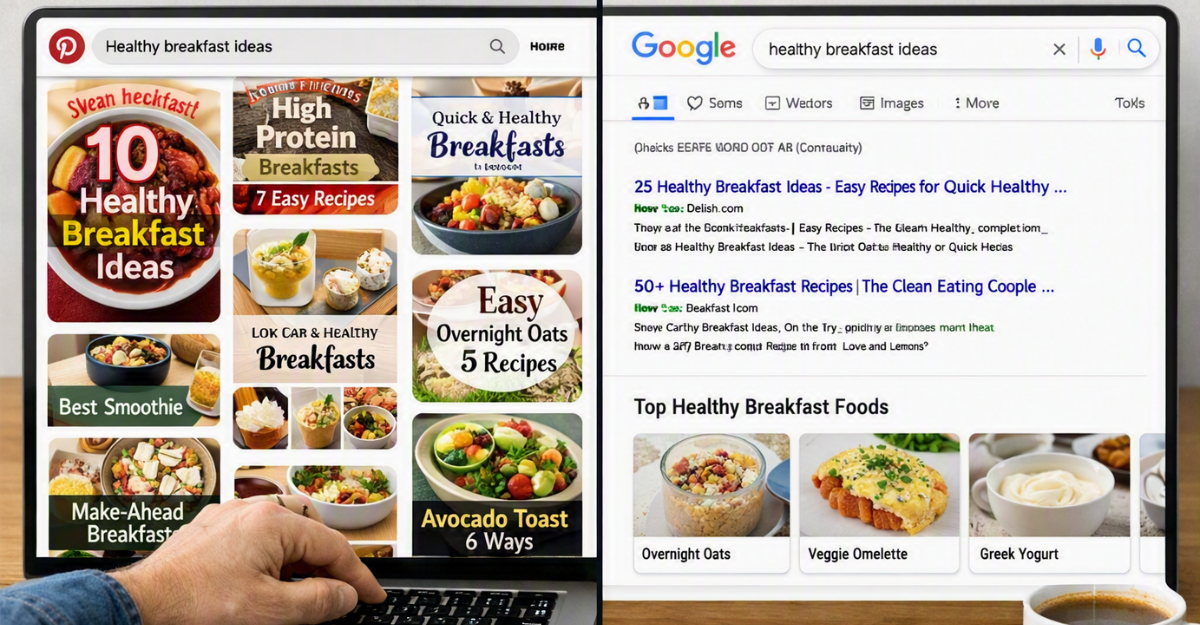
The easiest way to understand the difference is to think about what people are doing on each platform. When someone uses Google, they are usually looking for an answer. They might type
- “how to start affiliate marketing”
- “How to get traffic to a new blog”
- “best affiliate marketing programmes for beginners”
They have a question or problem, and Google attempts to provide the most useful answers. Pinterest is different. Pinterest is often used more like a visual discovery and search platform. Someone might search for:
- “Affiliate marketing tips”
- “Blogging ideas”
- “Make money online”
- “Work from home ideas”
They may not have decided exactly what they are looking for yet. They are exploring. That distinction is important because it creates different opportunities for your content. With Google, you are competing for positions in search results.
With Pinterest, you are creating visual content that can catch someone’s attention and encourage them to click through to your website. Neither approach is automatically better. They simply play different roles.
What Is Google SEO?
SEO stands for Search Engine Optimisation. In simple terms, it means creating and organising your website content so search engines can understand it and potentially show it to people searching for related topics.
There are many parts to SEO, and your article needs to answer the searcher’s question. Your title needs to describe the content accurately, and your website needs to provide a good experience. Your content should be useful and trustworthy.
You also need to consider things such as keywords, internal linking, site structure and the overall authority of your website. There is much more to SEO than simply adding a keyword to an article, and this is where beginners can sometimes become overwhelmed.
You can spend so much time worrying about SEO that you forget the most important part. You are writing for people first. That is something I have become much more conscious of as I have built my own content system.
What Is Pinterest Traffic?
Pinterest is also a search-driven platform, but the experience is much more visual. Instead of simply seeing a list of blue links, users see pins designed to catch their attention. A pin can contain an image, a headline and a short description.
When someone finds a pin that interests them, they can click through to the website behind it. That means one blog article can become multiple pieces of Pinterest content. For example, imagine you have an article called: How to Start Affiliate Marketing as a Beginner.
You could create one pin focused on beginner steps. Another could focus on common mistakes. Another could focus on realistic expectations. Another could use a personal story, and another could focus on getting your first website visitor. The article stays the same, but the angles change.
This is one of the things I really like about Pinterest. You are not constantly creating completely new content; you are learning how to repurpose one useful piece of content into multiple entry points.

Pinterest vs Google SEO: The Biggest Difference
For me, the biggest difference comes down to this: Google is heavily dependent on search rankings. Pinterest gives you another way to distribute your content while those rankings develop.
That does not mean Pinterest guarantees traffic. It does not. You still need good pins, useful articles, consistent publishing and patience. But you are not putting all of your hopes into one traffic source. And I think that is particularly important for beginners.
If your website is only a few months old, you may not have the authority needed to compete with established websites for highly competitive Google searches. That does not mean your content is bad. It simply means you are entering a competitive environment. Pinterest can give you another route.
Which Is Easier for Beginners?
This is where I would be careful. I would not tell you that Pinterest is “easy”. Nothing worthwhile in affiliate marketing is completely effortless.
- You still need to learn how the platform works.
- You need to understand your audience.
- You need to create useful content.
- You need to write good headlines.
- You need to create attractive pins.
- And you need to be consistent.
However, I personally find Pinterest easier to integrate into my current content workflow because I can create multiple pins from an article I have already written. That gives the article more opportunities to be discovered.
Instead of thinking, “I wrote my article, now I just wait. ” My thinking becomes: “I wrote my article. Now how many useful ways can I introduce people to it?” That is a completely different mindset.
The Beginner Traffic Trap
One of the biggest mistakes I see beginners make is believing that traffic will appear simply because they have created a website. I understand why. When you build something, you naturally expect people to find it.
But the internet does not work that way. There are millions of websites competing for attention. Your article can be excellent and still receive very little traffic. That does not necessarily mean you should give up.
It may simply mean that you have not given enough people an opportunity to discover it yet. This is why I like to separate content creation from content distribution. Your article is the asset.
Pinterest, Google, social media, email and other channels can become distribution methods. Once you start thinking this way, your website becomes much more than a collection of blog posts. It becomes the centre of your content ecosystem.
My Four Stage Traffic Framework
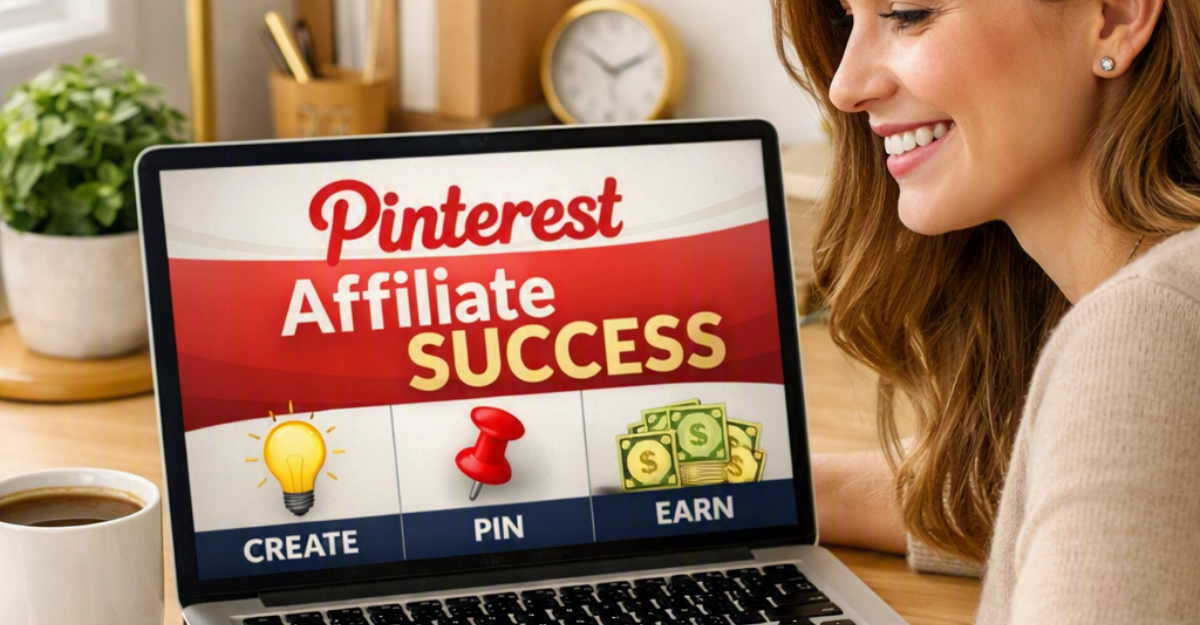
This is something I have learned while building my own affiliate marketing system. I call it:
The Four Stage Traffic Framework.
Stage 1: Create
First, create something genuinely useful. That could be a blog article, guide, review or tutorial. Do not start with traffic. Start with value.
Stage 2: Optimise
Next, make sure your content is understandable and useful for both your readers and search engines. This is where your basic SEO work comes in. Clear headings, useful information, internal links and a good reader experience all matter.
Stage 3: Distribute
Now give people a reason to discover the content. This is where Pinterest can become extremely useful. Create pins around the article and distribute them consistently.
Stage 4: Build
Finally, keep going. Your content library grows. Your Pinterest presence grows. Your website becomes more established. Your email list can grow. Your audience begins to recognise your name.
And over time, all of these pieces can begin working together. That is the part beginners often miss. You are not simply trying to get one visitor. You are building an asset.
Should You Ignore Google SEO?
Absolutely not. I would not recommend abandoning SEO simply because you are using Pinterest. In fact, I think the two work very well together.
Your Pinterest strategy can help you distribute your content while your SEO strategy continues developing in the background. Think of it this way.
Pinterest can help you get your content discovered. Google can help your content become a long-term search asset. You do not necessarily have to choose one and completely ignore the other. That is the approach I prefer.
Why Pinterest Can Be Useful While Your Website Is Young
A new website has a difficult challenge. You need traffic to prove that your content is useful, but you also need time to build authority. Pinterest offers another avenue to get your content in front of potential readers.
This does not mean every pin will take off. Some may receive very little attention. Others may gradually gain impressions. A few may perform much better than expected. That is normal.
One thing I have learned is not to judge the entire strategy based on a single pin or a single day. Pinterest is a long game too. The difference is that you have another distribution mechanism working alongside your website.
A Simple Pinterest and SEO Strategy for Beginners
If I were starting again today, I would keep the system fairly simple. I would build a website around a clear niche. I would create useful articles designed around problems my audience actually has. I would apply sensible SEO to those articles.
Then I would create Pinterest content for each article. I would not create one pin and forget about the article. I would create several different angles. One pin might focus on the problem.
- Another might focus on the solution.
- Another might tell a story.
- Another might create curiosity.
This gives the same article multiple opportunities to be discovered. And importantly, it keeps me focused on building a content library rather than constantly chasing the next shiny traffic method.
Where Does Affiliate Marketing Fit Into This?
This is where the strategy becomes particularly interesting. If you are building an affiliate marketing business, you ultimately need more than traffic. You need trust. Someone clicking on a Pinterest pin is only the beginning.
- They arrive at your article.
- They read your experience.
- They learn something useful.
- They discover other relevant articles.
Eventually, they may visit your review page or your beginner guide. That is where the relationship starts becoming more valuable.
For example, if you are interested in learning more about affiliate marketing, you can also read my Beginner Guide to Affiliate Marketing, where I walk through the basic process in a much more structured way.
The important thing is not to rush the visitor.
- Help them first.
- Build trust.
Then introduce the opportunity when it genuinely makes sense. That is the approach I want my own website to follow.
Pinterest vs Google SEO: A Simple Comparison
| Google SEO | |
| Visual discovery platform | Search engine |
| Highly visual | Primarily text and content based |
| Pins can be created from existing articles | Content needs to compete in search results |
| Useful for content distribution | Useful for long term organic search traffic |
| Can introduce new audiences to your content | Captures people actively searching |
| Requires consistent pin creation | Requires ongoing SEO and content development |
| Can support a newer website | Often becomes stronger as authority develops |
| Works particularly well with visual topics | Works across almost every content category |
The important point is that this is not really a competition; Pinterest and Google can complement each other.
The Mistake I Would Avoid
If you are new to affiliate marketing, I would avoid trying to master everything at once.
- SEO.
- Pinterest.
- Facebook.
- Instagram.
- YouTube.
- TikTok.
- Email marketing.
- Paid advertising.
It becomes very easy to spend your entire week learning about traffic instead of actually building your business. I know because I have been there. Instead, choose a primary traffic strategy and become comfortable with it.
For my current strategy, Pinterest is the primary distribution channel. SEO still matters. My website still needs good content, but Pinterest gives me a practical system for getting that content in front of people. That keeps the process manageable.
What I Would Do If I Were Starting From Zero
If I had a brand new website today, I would not wait six months hoping Google would eventually send traffic. I would build the website properly from the beginning and create helpful beginner-focused content.
I would learn basic SEO rather than becoming obsessed with every technical detail, and then I would start creating Pinterest pins around those articles. I would track what happens and improve the pins.
I would continue publishing useful articles, then give the system time to develop. Most importantly, I would remember that traffic is not the business; traffic is the bridge to the business. The real goal is to turn that traffic into relationships, subscribers, customers and eventually commissions.
Your Traffic Strategy Does Not Need to Be Complicated
If you are sitting there wondering whether you should focus on Pinterest or Google SEO, my answer is slightly different from simply telling you to pick one. Use both, but give them different jobs.
Let SEO help you build a long-term foundation, while Pinterest help you distribute your content and create additional discovery opportunities, and keep building.
That is much more sustainable than constantly jumping from one traffic strategy to another. And remember, if your website is not getting much traffic yet, it does not automatically mean you are failing; it just means that you are early. I have had to remind myself of that more than once.
Final Thoughts
When I first started thinking seriously about website traffic, I believed getting visitors was mainly about writing good articles. I now see it differently.
Writing the article is only one part of the process. You also need a way to help people discover it. Google SEO can become a powerful long-term source of traffic, but it takes patience, especially when your website is still developing.
Pinterest gives you another route. It allows you to turn your articles into visual content and put those ideas in front of people who are already searching and discovering information on the platform. That is why I believe Pinterest deserves serious consideration from affiliate marketing beginners.
Not because it is a magic traffic button, it isn’t. But because it can become part of a simple, repeatable content distribution system. And when you combine that with useful articles, SEO, email marketing and a strong focus on building trust, you are no longer just hoping someone finds your website.
You are building a system that gives your content more chances to be discovered.
That is the real goal.
Ready to Build Your Affiliate Marketing Foundation?
If you are still at the beginning of your affiliate marketing journey, I have put together my Beginner Guide to Affiliate Marketing to help you understand the process step by step.

And if you are looking for a platform where you can learn affiliate marketing while building your own website, you can also read my Wealthy Affiliate Review, where I share my experience and explain what the platform offers beginners.

You do not need to have everything figured out today. Start with one article. Learn how to get it discovered. Build another. Keep improving. That is how a real online business begins.
How to Get Traffic from Pinterest for Affiliate Marketing: (A Beginner’s Guide)
Learn how Pinterest works as a traffic source and how to start creating pins that lead people back to your website.
How to Build an Affiliate Marketing Habit
Consistency is one of the biggest challenges beginners face. This article explains how creating a simple routine can help you keep moving forward.
How to Stay Organised as an Affiliate Marketer
Once you start creating articles, pins and other content, organisation becomes increasingly important. A simple system can help prevent your workload from becoming overwhelming.
Why Most Affiliate Marketers Fail
Traffic is only one piece of the puzzle. Understanding why beginners quit can help you build a business you are prepared to stick with.
Frequently Asked Questions
Is Pinterest better than Google SEO for beginners?
Not necessarily. They serve different purposes. Pinterest can provide another way to distribute and discover your content, while Google SEO can become a powerful long term source of organic search traffic.
Can Pinterest replace SEO?
I would not recommend thinking about it that way. Pinterest and SEO can work together. Your website can be optimised for search engines while Pinterest helps distribute your content.
How long does Pinterest take to generate traffic?
There is no guaranteed timeframe. Some pins may gain attention quickly, while others can take much longer. Consistency, useful content and learning what your audience responds to are important.
Does Google SEO take longer than Pinterest?
SEO can take considerable time, particularly for a new website competing against established websites. Pinterest can provide additional discovery opportunities while your website and SEO foundation develop.
Should affiliate marketing beginners use Pinterest?
If your niche and content are suitable for Pinterest, I believe it is worth testing. It can be especially useful for bloggers because you can create multiple pins from your existing articles.
Can I use Pinterest and Google at the same time?
Yes. In fact, that is the approach I prefer. Use SEO to build your website’s long term foundation and Pinterest as an additional content distribution channel.
What should I focus on first, SEO or Pinterest?
Start by creating useful content and making sure your website has a solid foundation. Then develop a manageable Pinterest strategy alongside basic SEO. You do not need to become an expert in either one before you begin.